


Newsletter
» Read newslettersNews
-
> -- - The MASSAR project presented at IEEE2012
 The IEEE 2012 - Nuclear Science Symposium and Medical Imaging Conference- will...
-
> -- - TENEVIA, des mesures de débits par vidéo
 TENEVIA is a new start-up which is developing innovative solutions in the field...
-
> -- - MITIC STUDIES 2012 : The eco-design
 After photovoltaics and biomarkers, Sri Nathalie Fabre, strategic analyst for...


PAPEL

Environmentally high quality Li-ion-Paper Battery
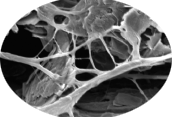
The PAPEL battery is flexible, ecological and economic. It could meet the production requirements of small stationary and roaming units up to larger scale products such as electric vehicles and renewable energy power stations.Polymer electrodes are replaced by paper electrodes, toxic solvent is removed and the fluorinated binder is replaced by cellulose fibers and microfibrils.
As a result of an aqueous filtration procedure and the use of materials of plant origin, the majority of the toxic and inactive components are removed, thus reducing cost and recycling problems.
» Description and functionalities
Electrodes in nanostructured cellulose microfibrils surrounding graphite (anode) or LiFePO4 (cathode) plates.» Technology
Water-based filtration procedurePaper from the standard paper industry
» Performances
- The discharge capacity of the anode and cathode reaches the nominal values for the active materials used (performances comparable to those obtained with standard binders and production procedures).- The bio-sourced binder provides the electrode with great flexibility (self-supporting) so that it can withstand stress of between 60 and 450 MPa
- Exploitation of the paper industry
- Possible to recycle the electrodes with a process in an aqueous medium.
» Laboratory
Laboratoire de Génie des Procédés Papetiers (LGP2) - Réf. 127003_CHAUSSY_PAPEL _091012_GB_1» Target
Li-ion battery» Application area
- Mobiles- Aerospace industry
- Automobiles
- Power stations
» Transfert offer
Licensing» Collaboration sought
- Search for collaboration with a battery manufacturer for an industrial scale compatibility study- Search for collaboration with a paper industry
» Contact :
Stephan Pedeche, Phone : +33 6 73 17 55 36» Interview with Didier Chaussy, Davide Beneventi et Lara Jabbour
 To date, Li-ion batteries have a high energy density, longer service life and provide additional safety. However, for use in large-scale products, it is necessary to reduce production costs and minimize the environmental impact. The PAPEL battery provides this via the substitution of fluorinated binders with cellulose, the substitution of toxic organic solvents with water and the use of a manufacturing procedure for electrodes from the paper industry with high production capacity.


